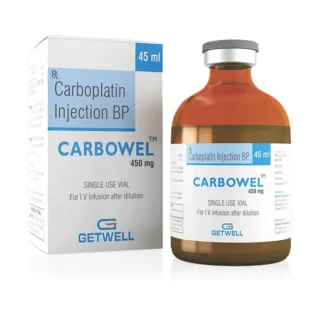
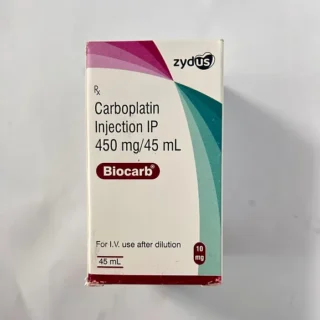
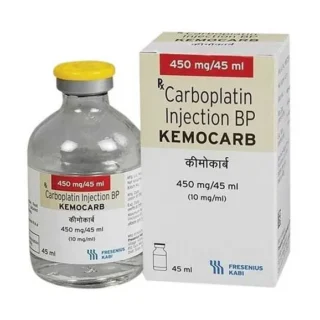
Carboplatin Injection
-
Type: Anticancer (chemotherapy) medication
-
Drug Class: Platinum-based chemotherapy agent
-
Form: Injectable solution given intravenously (IV)
How It Works
-
Carboplatin binds to DNA inside cancer cells and forms cross-links between DNA strands.
-
This prevents the DNA from replicating and stops cancer cells from dividing.
-
Eventually, this leads to cancer cell death.
Common Uses
Carboplatin is widely used to treat many types of cancer, including:
-
Ovarian cancer (first-line and recurrent)
-
Lung cancer (especially non-small cell lung cancer)
-
Head and neck cancers
-
Bladder cancer
-
Testicular cancer
-
Sometimes used for other solid tumors as part of combination chemotherapy
Advantages
-
Similar to cisplatin but generally less toxic to the kidneys and nerves
-
Lower risk of severe nausea and vomiting compared to cisplatin
-
Often better tolerated in older patients or those with kidney impairment
Possible Side Effects
-
Bone marrow suppression (low white blood cells, red blood cells, and platelets) → higher infection and bleeding risk
-
Fatigue
-
Nausea and vomiting (usually mild to moderate)
-
Hair loss (less common than with some other chemotherapy drugs)
-
Electrolyte imbalances (low magnesium, potassium)
-
Rare: allergic reactions (can occur after several doses)
-
Very rare: kidney or hearing problems (less common than with cisplatin)
Precautions
-
Requires regular blood tests to monitor blood counts and kidney function
-
Dose is carefully calculated based on kidney function (GFR) to avoid toxicity
-
Allergic reactions may occur, especially after repeated cycles — emergency support should be available
-
Use effective contraception, as carboplatin may harm an unborn baby