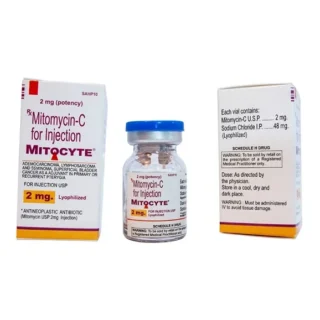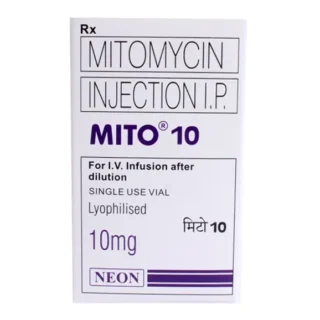

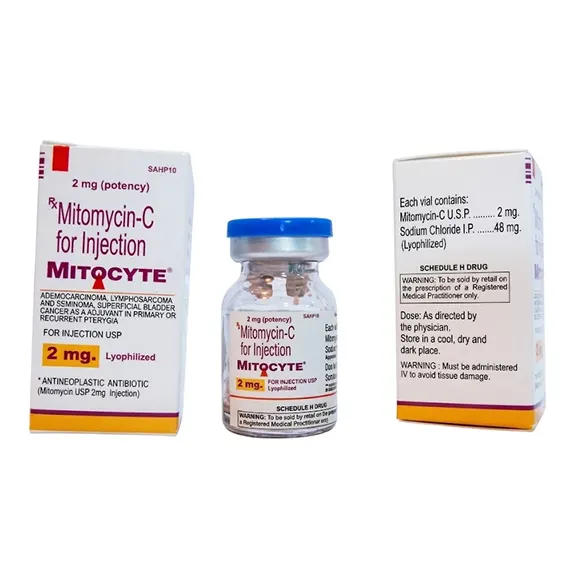
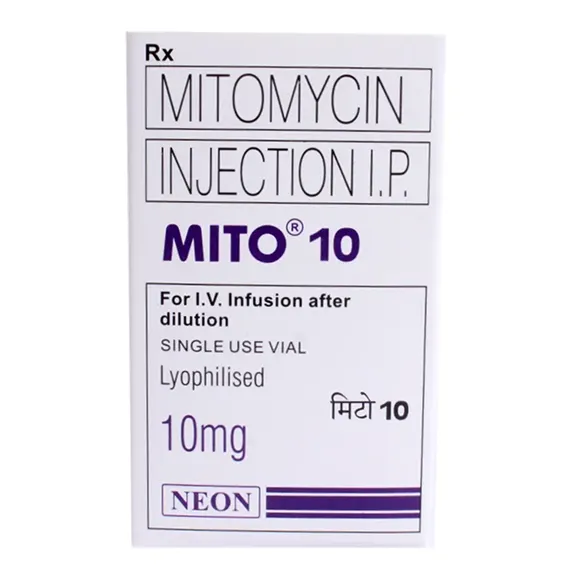
Mitomycin Injection
| Product/Composition | Mitomycin Injection |
|---|---|
| Strength | 2mg, 10mg |
| Form | Injection |
| Production Capacity | 1 Million Injection/Month |
| Therapeutic use | Anti Cancer |
| Package Insert/Leaflet | Available upon request |
| Brand Name | Mitomycin, Mito, Mitocyte |
Mitomycin Injection is a cytotoxic chemotherapy drug used to treat certain cancers. It is an antitumor antibiotic derived from Streptomyces species and works by interfering with DNA synthesis, leading to cell death.
Here are the key details:
1. Composition and Form
-
Active ingredient: Mitomycin C.
-
Supplied as a sterile lyophilized powder for reconstitution.
-
Intended for intravenous (IV) administration.
2. Mechanism of Action
-
Alkylates DNA, causing cross-linking between DNA strands.
-
Inhibits DNA replication and RNA transcription, leading to cell cycle arrest and apoptosis.
-
More active against rapidly dividing tumor cells, but can affect normal cells too.
3. Indications
-
Various cancers, including:
-
Gastrointestinal cancers (stomach, pancreas, colorectal).
-
Breast cancer (certain protocols).
-
Bladder cancer (sometimes intravesically).
-
Lung cancer (small cell and non-small cell in combination therapy).
-
-
Usually given as part of combination chemotherapy regimens.
4. Administration
-
Administered intravenously, typically as a slow infusion.
-
Dose is based on body surface area and treatment protocol.
-
Requires careful handling due to vesicant properties (can cause tissue necrosis if extravasated).
-
Hospital administration with monitoring is essential.
5. Side Effects
Common:
-
Myelosuppression: leukopenia, thrombocytopenia, anemia.
-
Nausea, vomiting, mucositis.
Serious:
-
Bone marrow suppression leading to increased infection risk.
-
Cardiotoxicity (rare).
-
Pulmonary toxicity with long-term use.
-
Extravasation can cause severe local tissue injury.
-
Alopecia (hair loss).
Other:
-
Fatigue, loss of appetite.
-
Rare allergic reactions.
6. Contraindications
-
Hypersensitivity to mitomycin or similar agents.
-
Severe myelosuppression or active infections.
-
Pregnancy and breastfeeding (teratogenic).
7. Precautions
-
Monitor blood counts, renal and liver function regularly.
-
Ensure proper IV access to avoid extravasation.
-
Use protective measures during preparation to prevent exposure.
-
Dose adjustment may be required in renal or hepatic impairment.
8. Storage
-
Store lyophilized powder in a cool, dry place, protected from light.
-
Reconstituted solution should be used immediately or within the recommended stability period.