
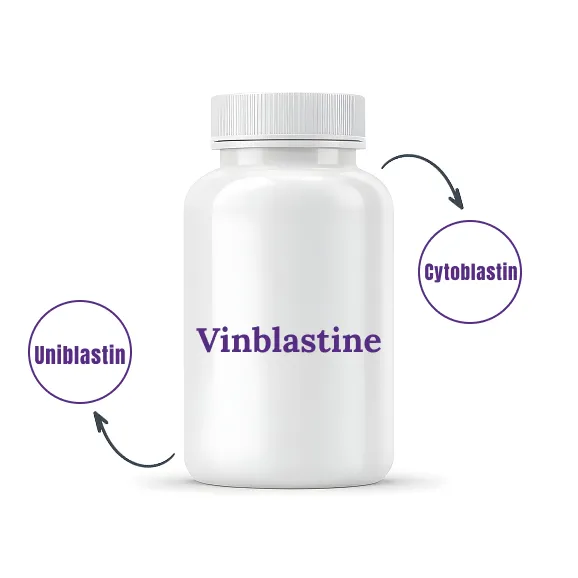
Vinblastine Sulphate Injection
| Product/Composition | Vinblastine Sulphate Injection |
|---|---|
| Strength | 10mg |
| Form | Injection |
| Production Capacity | 1 Million Injection/Month |
| Therapeutic use | Anti Cancer |
| Package Insert/Leaflet | Available upon request |
| Brand Name | Uniblastin, Cytoblastin |
Vinblastine Sulphate Injection
Category: Chemotherapy / Antineoplastic agent
Form: Injectable solution for intravenous (IV) use
Uses:
-
Treatment of various cancers, including:
-
Hodgkin’s lymphoma
-
Non-Hodgkin’s lymphoma
-
Testicular cancer
-
Kaposi’s sarcoma
-
Certain other solid tumors depending on treatment protocol
-
-
Often used in combination chemotherapy regimens to enhance effectiveness.
Mechanism of Action:
-
Vinblastine is a vinca alkaloid.
-
Binds to tubulin, inhibiting microtubule formation.
-
Prevents spindle formation during mitosis, causing cell cycle arrest in metaphase.
-
Leads to apoptosis (cell death) in rapidly dividing cancer cells.
Administration:
-
Administered intravenously, typically via slow infusion to avoid local tissue irritation.
-
Dosage depends on type of cancer, body surface area, and patient condition.
-
Usually given in cycles, with rest periods to allow recovery of normal cells.
Side Effects:
-
Hematologic: leukopenia, anemia, thrombocytopenia (bone marrow suppression).
-
Gastrointestinal: nausea, vomiting, constipation, mouth sores.
-
Neurological: peripheral neuropathy, numbness, tingling in hands/feet.
-
Other: hair loss, fatigue, injection site reactions.
Precautions:
-
Monitor complete blood counts (CBC) regularly to prevent severe myelosuppression.
-
Adjust dose in patients with liver impairment.
-
Use antiemetics to control nausea and vomiting.
-
Avoid extravasation during IV infusion, as it can cause severe tissue damage.
-
Exposure should be avoided in pregnant or breastfeeding women due to teratogenicity.
Summary:
Vinblastine Sulphate Injection is a chemotherapy drug that inhibits microtubule formation, causing cell cycle arrest and apoptosis in rapidly dividing cancer cells. It is used in the treatment of Hodgkin’s lymphoma, testicular cancer, Kaposi’s sarcoma, and other malignancies. Administered intravenously in cycles, it requires careful monitoring of blood counts and supportive care due to potential bone marrow suppression, neuropathy, gastrointestinal effects, and other side effects.