
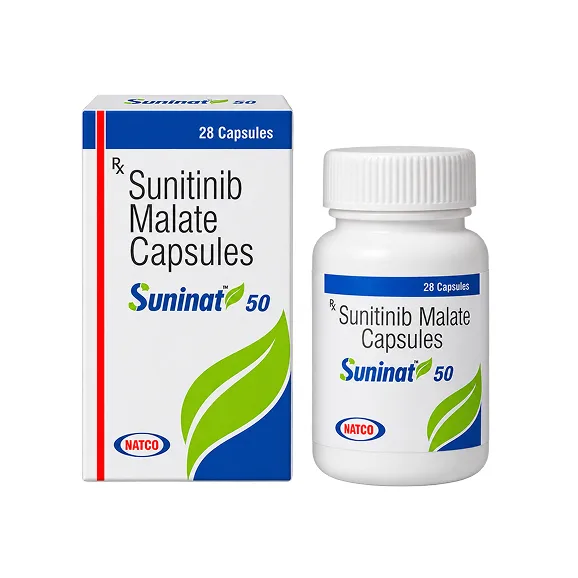
Sunitinib Suninat
| Product/Composition | Sunitinib Capsules (Suninat) |
|---|---|
| Strength | 12.5mg, 25mg, 50mg |
| Form | Capsule |
| Production Capacity | 10 Million Capsules/Month |
| Packaging | 10 X 10 Capsules / Box |
| Therapeutic use | Antineoplastic / Tyrosine Kinase Inhibitor |
| Package Insert/Leaflet | Available upon request |
| Brand Name | Suninat |
Sunitinib Capsules are targeted anticancer medicines belonging to the class of tyrosine kinase inhibitors (TKIs). They are used in the treatment of certain cancers, including renal cell carcinoma (RCC), gastrointestinal stromal tumors (GIST), and pancreatic neuroendocrine tumors (pNET). Sunitinib works by inhibiting several tyrosine kinases involved in tumor-cell growth and the formation of new blood vessels that supply tumors.
What are Sunitinib Capsules?
Sunitinib is the active ingredient present in Suninat. It inhibits signaling pathways involving VEGF receptors, PDGF receptors, KIT, and other tyrosine kinases, helping to slow tumor growth and angiogenesis.
- Drug Classification: Tyrosine Kinase Inhibitor / Antineoplastic
- Therapeutic Use: Anticancer / Targeted Cancer Therapy
- Route of Administration: Oral
- Active Ingredient: Sunitinib
Benefits of Sunitinib Capsules
Sunitinib may be prescribed for:
- Renal Cell Carcinoma (RCC): Used to treat certain advanced or metastatic kidney cancers.
- Gastrointestinal Stromal Tumor (GIST): Used when the tumor cannot be treated effectively with certain other therapies.
- Pancreatic Neuroendocrine Tumors (pNET): Used for unresectable or metastatic, well-differentiated pancreatic neuroendocrine tumors in appropriate patients.
- Anti-Angiogenic Activity: Helps inhibit the formation of new blood vessels required for tumor growth.
The primary therapeutic benefit of Sunitinib is its ability to block growth-signaling pathways and reduce tumor-supporting blood-vessel formation.
Dosage Guidelines
The dosage and treatment schedule of Sunitinib are determined by an oncologist based on the type of cancer, treatment protocol, response to therapy, overall health, and other medicines.
Sunitinib is taken orally, with or without food, according to the prescribed treatment schedule. Dose interruptions or adjustments may be required depending on tolerability and laboratory results.
Patients should not change the dose or stop treatment without medical advice.
Sunitinib Capsules Wholesale & Supply
Onco India International provides wholesale and bulk pharmaceutical supply of Sunitinib products to eligible hospitals, pharmacies, healthcare providers, distributors, and other authorized buyers, subject to applicable regulations.
Buying Sunitinib Capsules Online
Sunitinib is a prescription oncology medicine and should be obtained through authorized pharmaceutical suppliers. Buyers should verify product authenticity, strength, manufacturer information, packaging, expiry date, and applicable regulatory requirements.
Reviews on Sunitinib Capsules
Patients receiving Sunitinib may experience different treatment responses depending on the type and stage of cancer, previous treatments, overall health, and response to therapy.
Patient experiences should not replace advice from a qualified oncologist.
Quality Assurance
Sunitinib products supplied by Onco India International are intended to meet applicable pharmaceutical quality and regulatory requirements. Proper manufacturing, storage, packaging, and distribution practices are important for maintaining product quality.
Because Sunitinib can cause significant adverse effects and laboratory abnormalities, appropriate medical supervision and monitoring are important during treatment.
Frequently Asked Questions
1. What is Suninat used for?
Suninat contains Sunitinib and may be used to treat certain kidney cancers, gastrointestinal stromal tumors, and pancreatic neuroendocrine tumors.
2. How does Sunitinib work?
Sunitinib blocks several tyrosine kinase receptors, including VEGF and PDGF receptors, which can inhibit tumor-cell signaling and the formation of blood vessels that support tumor growth.
3. Is Sunitinib a chemotherapy medicine?
Sunitinib is not traditional cytotoxic chemotherapy. It is a targeted tyrosine kinase inhibitor (TKI).
4. Does Sunitinib require regular monitoring?
Yes. Healthcare professionals may monitor blood pressure, blood counts, liver and kidney function, thyroid function, and cardiac function during treatment.
5. What are common side effects of Sunitinib?
Possible side effects include fatigue, diarrhea, nausea, vomiting, loss of appetite, mouth sores, skin or hair changes, and hand-foot syndrome. Serious cardiovascular, liver, bleeding, and other complications can also occur.
6. Can Sunitinib be taken with food?
Yes. Sunitinib may generally be taken with or without food, according to the prescribing information and instructions from the treating healthcare professional.
Conclusion
Onco India International supplies and exports Sunitinib Capsules (Suninat) for pharmaceutical and oncology requirements, subject to applicable regulatory requirements. Sunitinib is a targeted tyrosine kinase inhibitor used in the treatment of certain kidney cancers, gastrointestinal stromal tumors, and pancreatic neuroendocrine tumors.
For safe and effective treatment, Sunitinib should be used only under the supervision of a qualified oncologist, with appropriate clinical and laboratory monitoring.