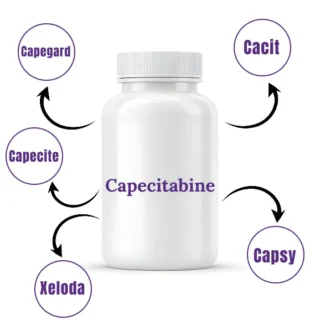
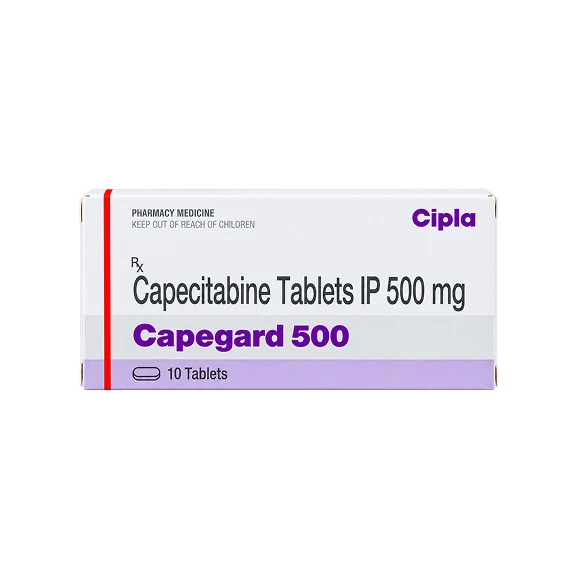
Capecitabine Capegard
| Product/Composition | Capecitabine Tablets |
|---|---|
| Strength | 150mg + 500mg |
| Form | Tablet |
| Production Capacity | 10 Million Tablets/Month |
| Packaging | 10 X 10 Tablets / Box |
| Therapeutic use | Colorectal Cancer / Breast Cancer / Chemotherapy |
| Package Insert/Leaflet | Available upon request |
| Brand Name | Capegard |
Capegard contains Capecitabine, an oral antineoplastic medicine used in the treatment of several types of cancer. Capecitabine is a prodrug that is converted in the body to 5-fluorouracil (5-FU), an active anticancer compound that interferes with DNA synthesis and inhibits the growth of rapidly dividing cancer cells.
Capecitabine is used in specific chemotherapy regimens for colorectal cancer, breast cancer, and other malignancies according to the treating oncologist’s protocol.
What is Capecitabine?
Capecitabine is an oral fluoropyrimidine antimetabolite. After administration, it undergoes several enzymatic conversion steps and is ultimately converted to 5-FU, particularly within tumor tissues.
The resulting active compound interferes with thymidylate synthesis and other cellular processes required for DNA and RNA production, helping inhibit cancer-cell proliferation.
Capegard (Capecitabine) should be used strictly according to the treatment regimen prescribed by an oncologist.
Benefits and Uses of Capecitabine
Capecitabine may be used for:
- Treatment of colorectal cancer
- Treatment of certain forms of breast cancer
- Treatment of selected gastrointestinal cancers
- Use as monotherapy or in combination with other anticancer medicines when clinically indicated
- Oral chemotherapy as part of specific oncology treatment protocols
The indication, combination therapy, and treatment duration depend on the type and stage of cancer and the patient’s individual treatment plan.
Dosage Guidelines
Capecitabine dosing is generally calculated according to body surface area (BSA) and the specific chemotherapy regimen.
- Take Capegard exactly as prescribed by the oncologist.
- Tablets are generally taken twice daily approximately 12 hours apart during prescribed treatment cycles.
- Capecitabine is usually taken within 30 minutes after a meal.
- Swallow the tablets whole with water; do not crush or chew them.
- The dosage may be adjusted or treatment temporarily interrupted if significant adverse effects occur.
- Do not change the dose or stop treatment without medical advice.
Wholesale & Supply
Onco India International supports the wholesale and international supply of Capecitabine products for eligible pharmaceutical distributors, importers, hospitals, and healthcare suppliers.
Bulk procurement requirements can be discussed according to:
- Required quantity
- Destination country
- Packaging requirements
- Regulatory requirements
- Shipping and documentation requirements
Buying Capecitabine Online
Capecitabine is a prescription chemotherapy medicine and should be sourced through authorized pharmaceutical suppliers and distributors.
For commercial or institutional requirements of Capegard (Capecitabine), customers can contact Onco India International for product information, documentation, and supply requirements.
Reviews
Individual responses to Capecitabine can vary depending on the type and stage of cancer, treatment combination, dosage, and patient characteristics. Treatment response should be assessed by the treating oncology team rather than based solely on individual experiences.
Quality Assurance
Capecitabine products should be manufactured, tested, packaged, and stored according to applicable pharmaceutical quality standards and regulatory requirements.
Relevant product documentation and quality information can be provided according to customer requirements and destination-market regulations.
Frequently Asked Questions
What is Capegard used for?
Capegard contains Capecitabine and is used as part of chemotherapy treatment for certain cancers, including colorectal and breast cancer.
What type of medicine is Capecitabine?
Capecitabine is an oral fluoropyrimidine antimetabolite and antineoplastic agent.
How does Capecitabine work?
Capecitabine is converted in the body to 5-fluorouracil (5-FU), which interferes with processes required for DNA synthesis and cancer-cell growth.
How should Capecitabine be taken?
It is generally taken orally twice daily according to the prescribed chemotherapy cycle, usually within 30 minutes after food.
What are the common side effects of Capecitabine?
Common adverse effects may include diarrhea, nausea, vomiting, abdominal discomfort, fatigue, reduced appetite, and hand-foot syndrome. Blood-count abnormalities can also occur.
Can Capecitabine cause hand-foot syndrome?
Yes. Hand-foot syndrome, characterized by redness, swelling, tenderness, or peeling of the palms and soles, is a recognized adverse effect of Capecitabine.
Does Capecitabine require medical supervision?
Yes. Capecitabine is a prescription chemotherapy medicine and should be used under the supervision of an oncologist.
Can the dose of Capecitabine be changed?
Dose adjustments or treatment interruptions may be necessary when significant toxicity occurs, but these decisions should be made by the treating oncology team.
Conclusion
Capegard (Capecitabine) is an oral fluoropyrimidine chemotherapy medicine used in specific treatment regimens for cancers including colorectal and breast cancer. As a prodrug of 5-fluorouracil, it interferes with DNA synthesis and cancer-cell proliferation. Because treatment response and toxicity vary between patients, Capecitabine should be administered according to a specialist-prescribed oncology protocol.