
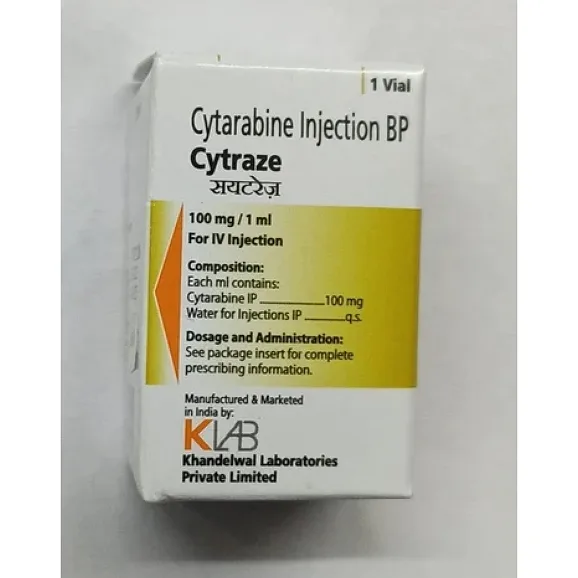
Cytarabine Cytraze
| Product/Composition | Cytarabine |
|---|---|
| Strength | 100mg, 1gm |
| Form | Injection |
| Production Capacity | 10 Million Vials/Month |
| Packaging | 1 Vial / Box |
| Therapeutic use | Acute Myeloid Leukemia / Acute Leukemia / Hematological Malignancies |
| Package Insert/Leaflet | Available upon request |
| Brand Name | Cytraze |
Cytraze contains Cytarabine, an antimetabolite and pyrimidine nucleoside analogue used as a cytotoxic chemotherapy medicine, particularly in the treatment of hematological malignancies.
Cytarabine interferes with DNA synthesis by inhibiting DNA polymerase and incorporating into DNA, thereby disrupting the replication of rapidly dividing malignant cells. It has an important role in the treatment of acute myeloid leukemia (AML) and is also used in selected leukemias and lymphomas.
Cytarabine may be administered intravenously, subcutaneously, or by specialized routes such as intrathecal administration, depending on the formulation and treatment protocol.
What is Cytarabine?
Cytarabine is a pyrimidine nucleoside analogue and antimetabolite chemotherapy agent. It primarily affects cells during the S phase of the cell cycle, when DNA synthesis occurs.
It is an important component of several intensive chemotherapy protocols for acute leukemias, including induction and consolidation treatment for AML.
Benefits / Uses
Cytraze (Cytarabine) may be used as part of specialist chemotherapy protocols for:
- Acute Myeloid Leukemia (AML)
- Acute Lymphoblastic Leukemia (ALL)
- Certain lymphomas
- Selected other hematological malignancies
- Meningeal involvement of leukemia or lymphoma when administered intrathecally under specialist supervision
Dosage Guidelines
Cytarabine dosing varies substantially according to the malignancy, treatment phase, chemotherapy combination, route of administration, and patient-specific factors.
- Administer only under qualified oncology supervision.
- Cytarabine may be administered intravenously or subcutaneously depending on the prescribed regimen.
- Intrathecal administration requires specialized protocols and trained healthcare professionals.
- Complete blood counts should be monitored regularly because significant bone-marrow suppression can occur.
- Liver and kidney function may require monitoring.
- Dose adjustments may be necessary depending on toxicity and the treatment protocol.
- High-dose Cytarabine requires careful monitoring for neurological, ocular, hepatic, and other toxicities.
Wholesale & Supply
Cytraze (Cytarabine) may be supplied for pharmaceutical wholesale, institutional procurement, and export markets, subject to applicable regulatory requirements.
Bulk procurement enquiries may include:
- Available strengths and presentations
- Packaging configuration
- Certificate of Analysis (CoA)
- Batch documentation
- Manufacturing documentation
- Export and shipping documentation
Buying Online
Cytarabine is a prescription chemotherapy medicine and should be obtained through authorized pharmaceutical distributors, hospitals, or licensed healthcare channels. It should not be purchased or used without appropriate medical supervision.
Reviews
Individual treatment responses to Cytarabine vary depending on the type and stage of malignancy, treatment regimen, dosage, and patient-specific factors. Treatment response and tolerability should be assessed by the treating oncology team.
Quality Assurance
Cytraze (Cytarabine) should undergo appropriate pharmaceutical quality-control testing according to applicable standards, including relevant testing for identity, potency, purity, sterility, and other formulation-specific requirements.
Frequently Asked Questions
What is Cytraze used for?
Cytraze contains Cytarabine and is primarily used as part of chemotherapy regimens for acute leukemias, particularly AML, and selected other hematological malignancies.
What type of medicine is Cytarabine?
Cytarabine is an antimetabolite chemotherapy medicine and pyrimidine nucleoside analogue.
How does Cytarabine work?
Cytarabine interferes with DNA synthesis by inhibiting DNA polymerase and disrupting DNA replication in rapidly dividing cells.
How is Cytraze administered?
Depending on the formulation and treatment protocol, Cytarabine may be administered intravenously or subcutaneously. Certain specialized regimens use intrathecal administration.
Is Cytarabine used in AML treatment?
Yes. Cytarabine is a key component of many chemotherapy regimens used to treat acute myeloid leukemia.
What are the common side effects of Cytarabine?
Potential adverse effects include myelosuppression, anemia, neutropenia, thrombocytopenia, nausea, vomiting, fever, mucositis, and increased susceptibility to infections.
Can high-dose Cytarabine cause neurological side effects?
Yes. High-dose Cytarabine can cause neurological toxicity, including cerebellar dysfunction, and therefore requires appropriate clinical monitoring.
Does Cytarabine require blood-count monitoring?
Yes. Regular complete blood counts are important because Cytarabine can cause significant bone-marrow suppression.
Who should administer Cytraze?
Cytraze should be prescribed and administered by qualified healthcare professionals experienced in cancer chemotherapy.
Conclusion
Cytraze (Cytarabine) is an antimetabolite chemotherapy medicine with an important role in the treatment of acute myeloid leukemia and other selected hematological malignancies. By interfering with DNA synthesis, Cytarabine inhibits the proliferation of rapidly dividing malignant cells. Because treatment can cause substantial myelosuppression and other serious toxicities, its use requires specialist oncology supervision and appropriate laboratory monitoring.