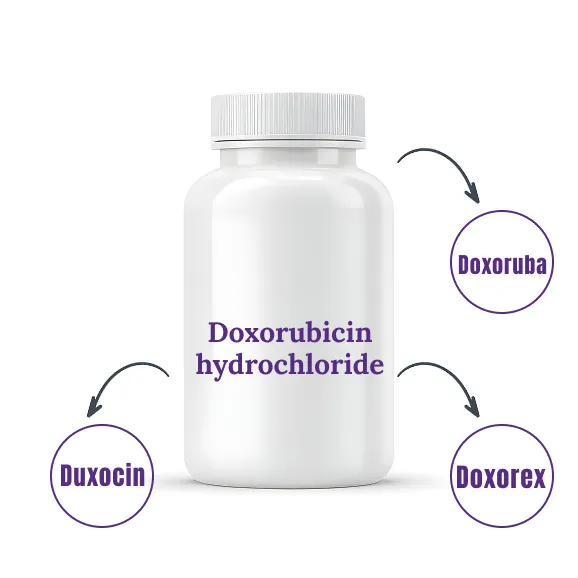
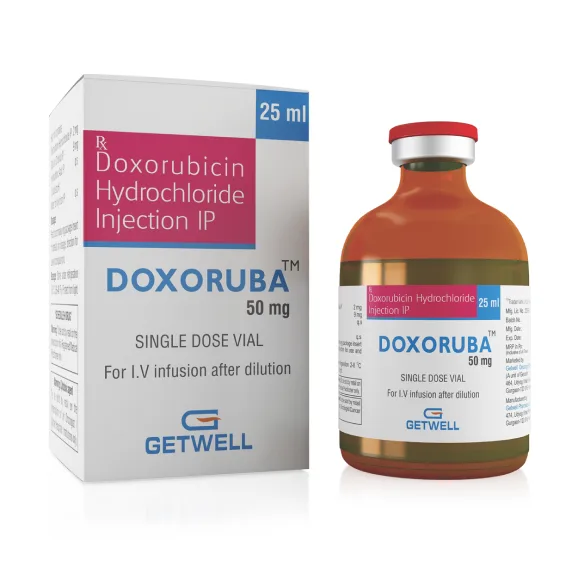
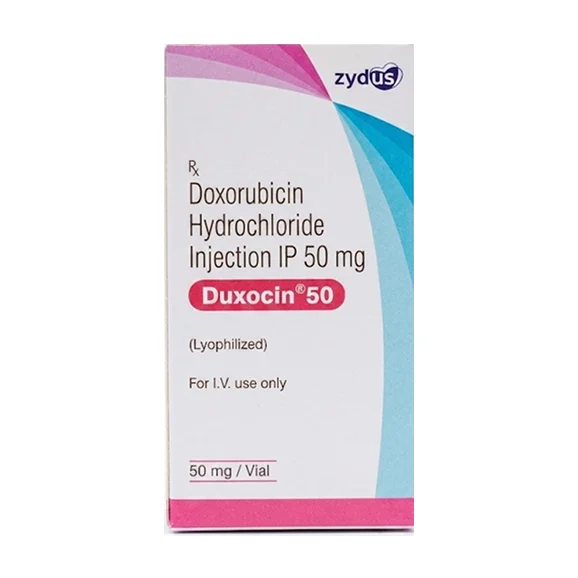
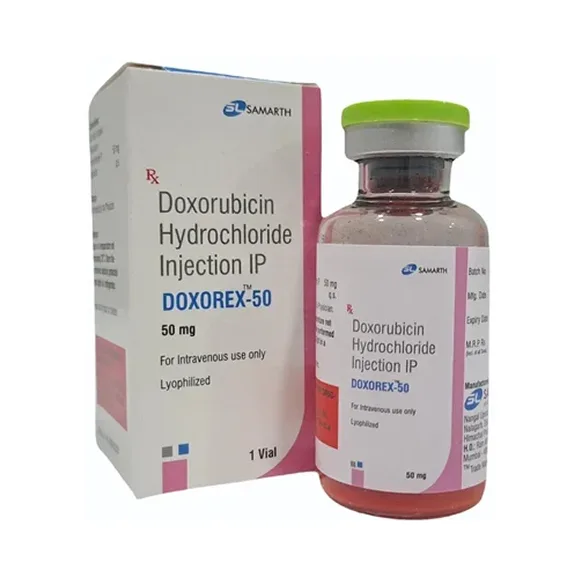
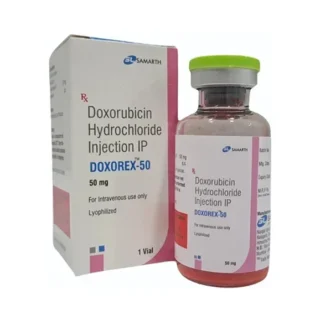
Doxorubicin Hydrochloride Injection
-
Type: Chemotherapy medication
-
Drug Class: Anthracycline antineoplastic agent
-
Form: Sterile solution or lyophilized powder for intravenous (IV) infusion
How It Works
-
Doxorubicin works by intercalating between DNA base pairs, preventing DNA replication and transcription.
-
It also inhibits topoisomerase II, an enzyme essential for unwinding DNA during cell division.
-
Generates free radicals that damage cell membranes and DNA, leading to cancer cell death.
Common Uses
Doxorubicin is widely used in combination chemotherapy regimens for many cancers, including:
-
Breast cancer (adjuvant and metastatic)
-
Lymphomas (Hodgkin’s and non-Hodgkin’s)
-
Leukemias (acute lymphoblastic leukemia, AML)
-
Sarcomas (bone and soft-tissue)
-
Bladder cancer (sometimes instilled intravesically)
-
Other solid tumors (ovarian, gastric, thyroid, etc.)
Advantages
-
Very effective in rapidly killing dividing cancer cells
-
A cornerstone drug in many standard chemotherapy regimens (e.g., CHOP for lymphoma, AC for breast cancer)
-
Can be combined with other drugs for synergistic effect
Possible Side Effects
Common:
-
Bone marrow suppression (low white blood cells, anemia, thrombocytopenia)
-
Hair loss (alopecia)
-
Nausea, vomiting, mouth sores
-
Red or orange urine for 1–2 days after infusion (harmless)
Serious:
-
Cardiotoxicity – risk of heart muscle damage, especially with high cumulative doses
-
Severe tissue damage if drug leaks outside the vein (extravasation)
-
Secondary leukemia (very rare, with prolonged use)
Precautions
-
Heart function tests (echocardiogram or MUGA scan) are done before starting and sometimes during treatment
-
Maximum lifetime cumulative dose must not be exceeded to prevent irreversible heart damage
-
Administered only via slow IV infusion by trained healthcare professionals
-
Patients should be monitored for signs of infection, bleeding, or heart problems during treatment