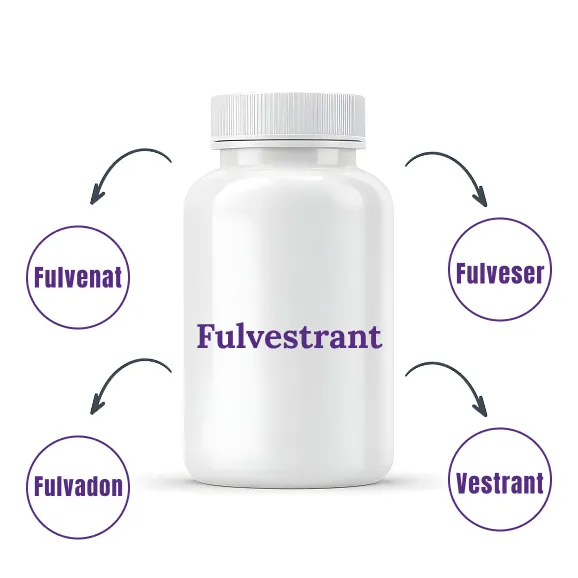
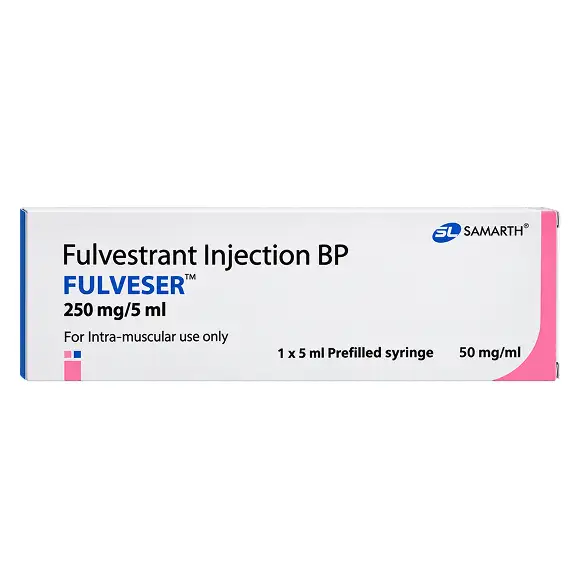
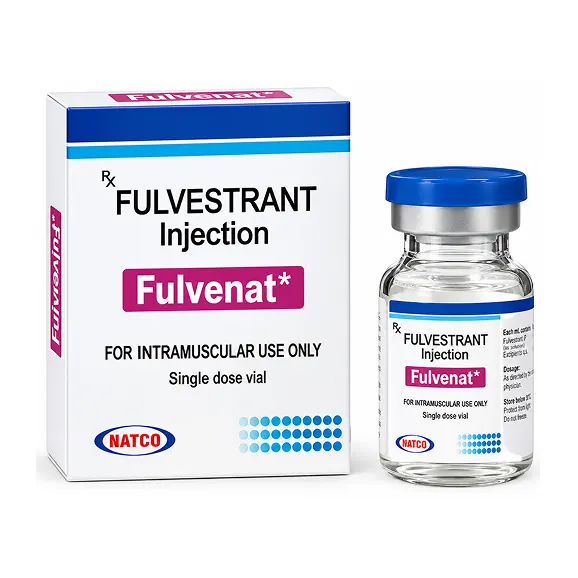
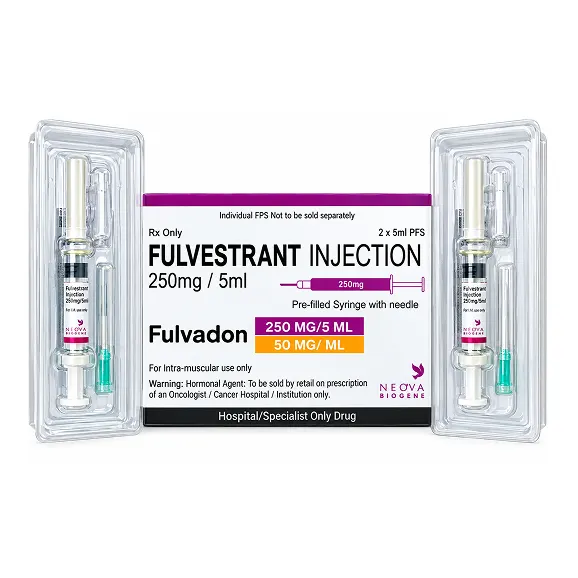
Fulvestrant Injection
-
Type: Hormonal (endocrine) therapy for breast cancer
-
Drug Class: Selective Estrogen Receptor Downregulator (SERD)
-
Form: Intramuscular (IM) injection, typically given in the buttock (gluteal muscle)
How It Works
-
Fulvestrant binds to estrogen receptors (ER) on breast cancer cells.
-
It causes receptor degradation and completely blocks estrogen signaling.
-
This leads to slowed growth or death of ER-positive breast cancer cells, which rely on estrogen for survival.
Common Uses
Fulvestrant injection is primarily used for:
-
Hormone receptor-positive (HR+), HER2-negative advanced or metastatic breast cancer in postmenopausal women
-
Often used after progression on other hormone therapies like tamoxifen or aromatase inhibitors
-
Can be combined with CDK4/6 inhibitors (e.g., palbociclib, ribociclib) for improved outcomes in advanced disease
Advantages
-
Pure estrogen receptor antagonist (no partial agonist activity, unlike tamoxifen)
-
Monthly injection → convenient dosing schedule
-
Useful in patients resistant to other hormone therapies
-
Generally well tolerated compared to chemotherapy
Possible Side Effects
Common:
Less Common but Important:
Precautions
-
Should not be used in patients with severe liver disease without dose adjustment
-
Not recommended during pregnancy or breastfeeding
-
Monitor liver function tests during treatment
-
Caution in patients with bleeding disorders or thrombocytopenia