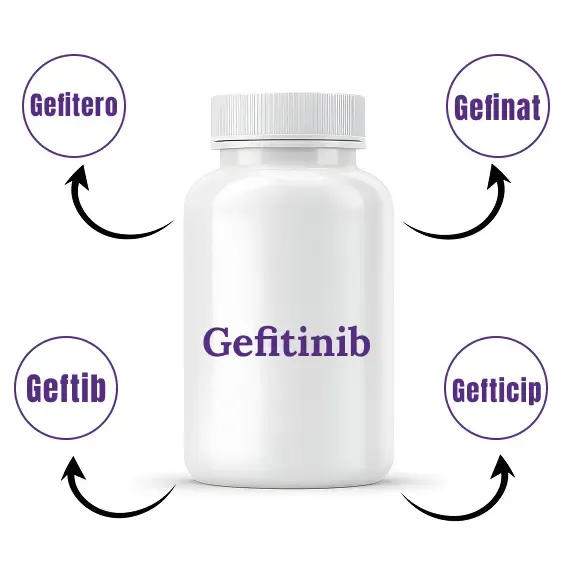
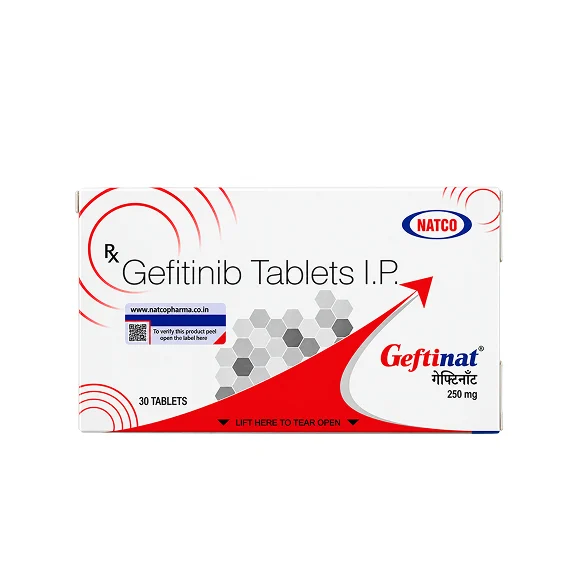
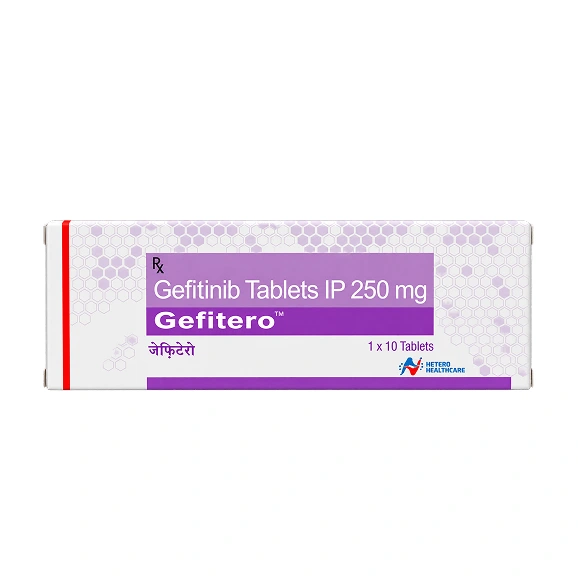
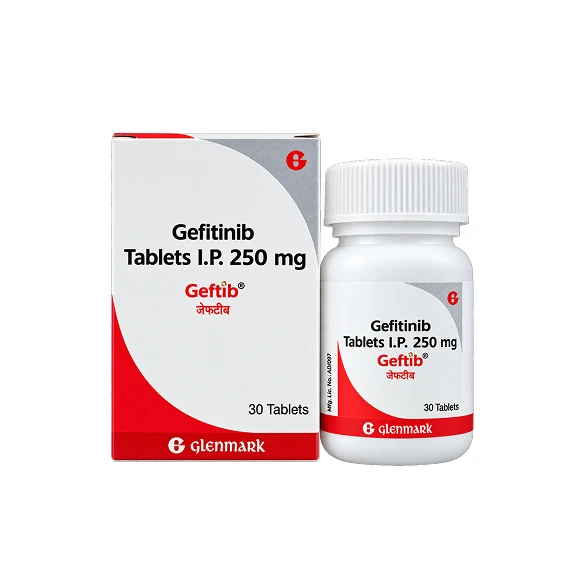
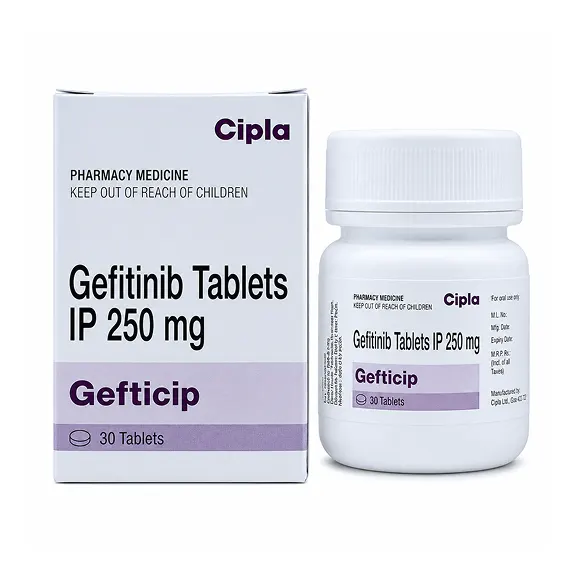
Gefitinib Tablets are a medicine used to treat certain types of cancer, primarily non-small cell lung cancer (NSCLC) with specific genetic mutations. They belong to a class of drugs called tyrosine kinase inhibitors (TKIs).
Here are the key details:
-
Composition: Each tablet contains Gefitinib, commonly in a 250 mg strength.
-
Dosage Form: Oral tablets, usually taken once daily, with or without food, as prescribed by a doctor.
-
Mode of Action:
-
Gefitinib specifically blocks the epidermal growth factor receptor (EGFR) tyrosine kinase, which is involved in the growth and division of cancer cells.
-
By inhibiting EGFR, it slows down cancer cell growth, division, and spread.
-
Uses:
-
Treatment Goal: To slow cancer progression, reduce tumor size, and improve survival and quality of life in patients with EGFR-positive cancers.
-
Side Effects:
-
Common: diarrhea, skin rash, acne, dry skin, nausea, fatigue.
-
Less common/serious: liver function changes, interstitial lung disease (breathing problems), eye disorders, severe skin reactions.
-
Precautions:
-
Regular monitoring of liver function, lung function, and overall health is required.
-
Not recommended during pregnancy or breastfeeding.
-
Avoid combining with certain medications that affect liver enzymes, as it may alter drug levels.
-
Take the tablet at the same time daily and do not crush or chew unless instructed.
Gefitinib is effective because it targets cancer cells with EGFR mutations specifically, making it a form of targeted therapy that can be more effective and have fewer systemic effects than traditional chemotherapy.