
L-Asparaginase Injection
| Product/Composition | L-Asparaginase Injection |
|---|---|
| Strength | 5000iu, 10000iu |
| Form | Injection |
| Production Capacity | 1 Million Injection/Month |
| Therapeutic use | Anti Cancer |
| Package Insert/Leaflet | Available upon request |
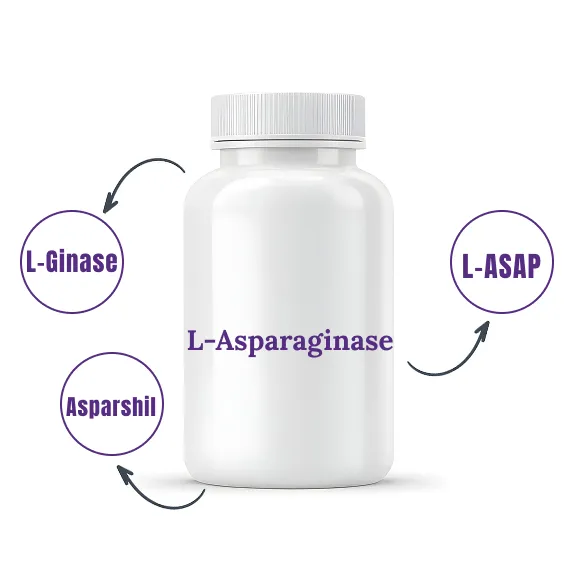
| Brand Name | L-Ginase, L-ASAP, Asparshil |
L-Asparaginase Injection is an anticancer (antineoplastic) medication used mainly in the treatment of certain blood cancers. It is an enzyme-based drug derived from Escherichia coli or Erwinia chrysanthemi that works differently from most chemotherapy agents.
Here are the main details:
1. Composition and Form:
-
Contains the enzyme L-asparaginase.
-
Supplied as a sterile lyophilized powder or solution in vials.
-
Administered by intravenous (IV) infusion or intramuscular (IM) injection.
2. Mechanism of Action:
-
L-asparaginase breaks down the amino acid asparagine into aspartic acid and ammonia.
-
Normal cells can synthesize asparagine, but certain cancer cells (especially leukemia cells) cannot.
-
By depleting asparagine in the blood, L-asparaginase starves cancer cells and inhibits their growth.
3. Indications:
-
Primarily used in acute lymphoblastic leukemia (ALL).
-
Also employed in some lymphomas, as part of combination chemotherapy protocols.
4. Administration:
-
Given under strict medical supervision, usually in hospitals or oncology centers.
-
Dosage depends on body surface area, treatment protocol, and patient’s clinical status.
-
Often used in combination with other chemotherapy drugs (e.g., vincristine, daunorubicin, prednisone).
5. Side Effects:
-
Hypersensitivity reactions: rash, fever, anaphylaxis (can be severe).
-
Pancreatitis: abdominal pain, elevated pancreatic enzymes.
-
Liver toxicity: elevated liver enzymes, jaundice.
-
Coagulation abnormalities: risk of bleeding or thrombosis due to reduced protein synthesis in the liver.
-
Metabolic effects: hyperglycemia, hyperlipidemia.
-
Nausea, vomiting, fatigue.
6. Contraindications:
-
History of severe hypersensitivity to L-asparaginase or its derivatives.
-
Pre-existing pancreatitis or history of pancreatitis.
-
Severe hepatic impairment in some cases.
7. Precautions:
-
Close monitoring of liver function, pancreas, blood clotting factors, and blood glucose.
-
Pre-treatment with antihistamines or corticosteroids may reduce hypersensitivity reactions.
-
Switch to an alternative preparation (e.g., Erwinia-derived) if allergic to E. coli formulation.
-
Requires monitoring during infusion for allergic or anaphylactic responses.
8. Storage:
-
Lyophilized powder: store refrigerated and protected from light.
-
Reconstituted solution: should be used within the recommended time frame as per product guidelines.