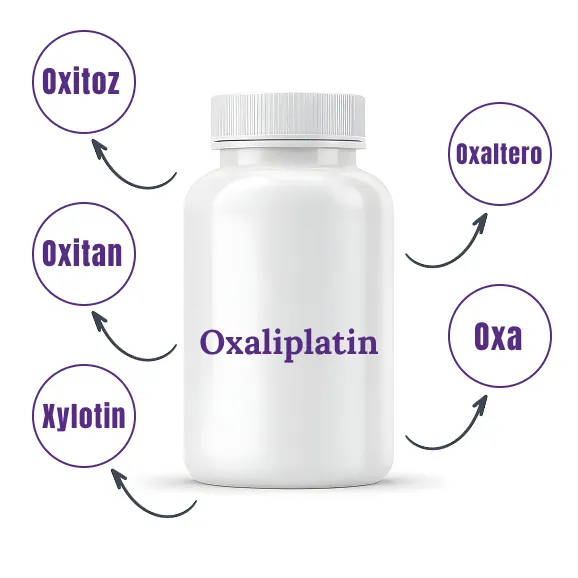
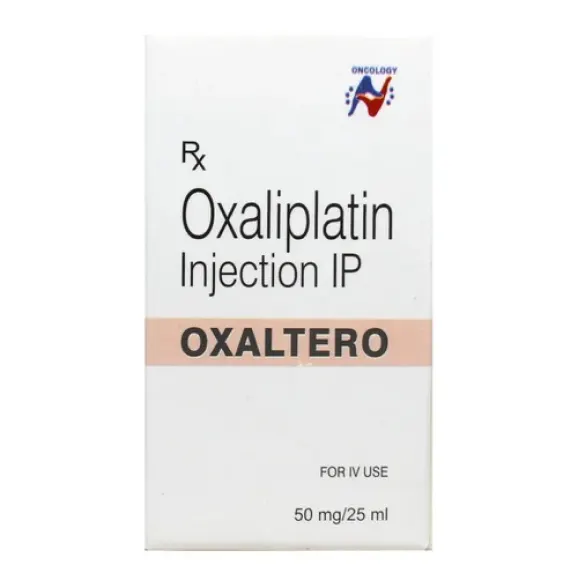
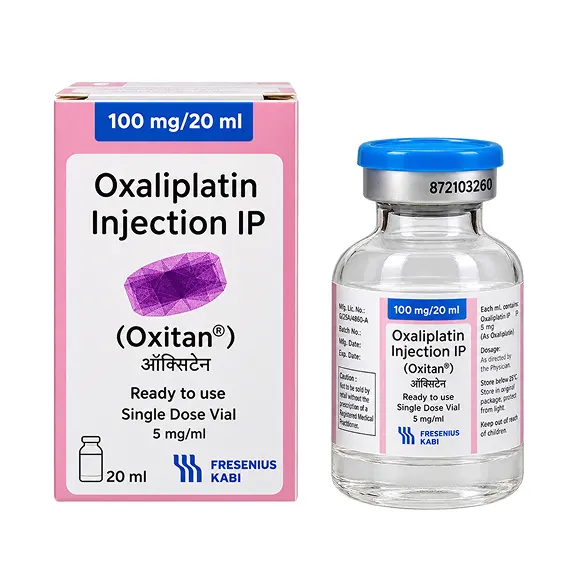
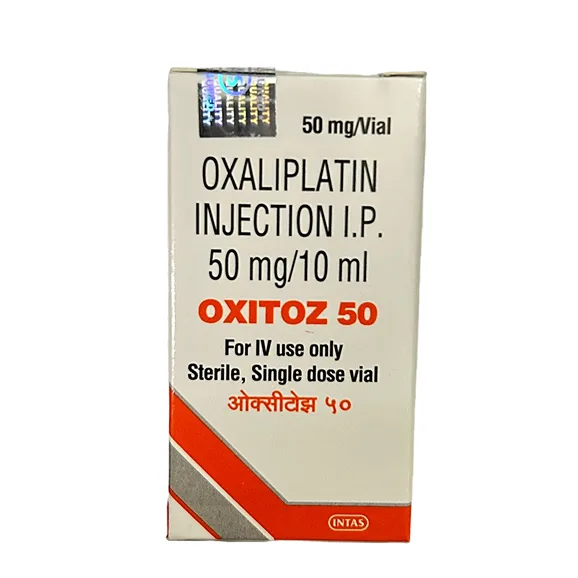
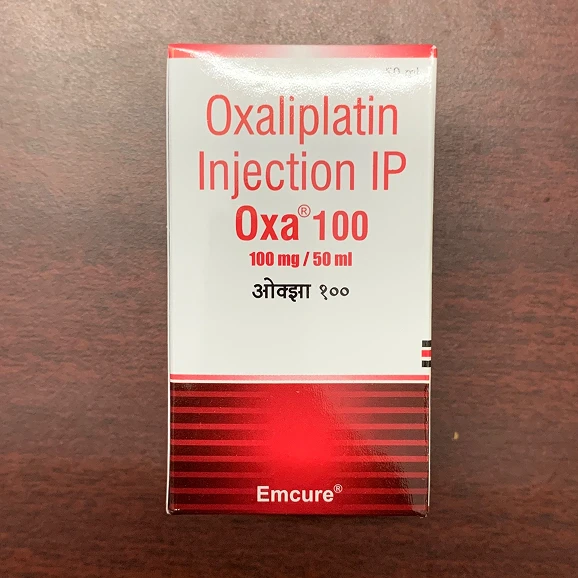
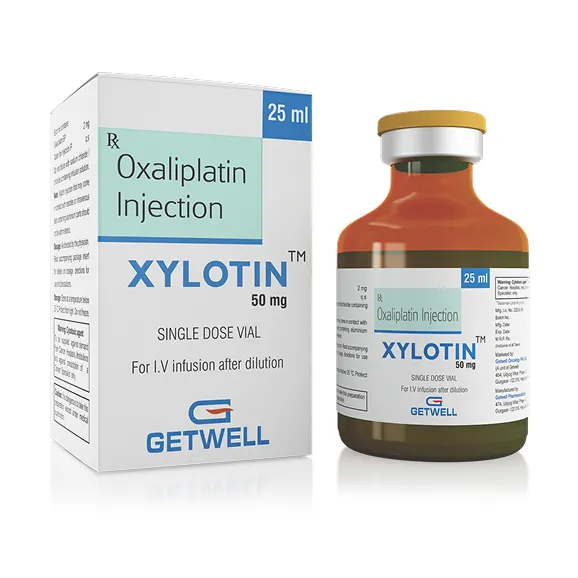
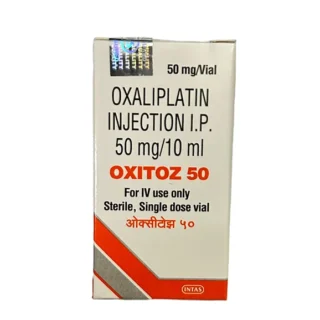
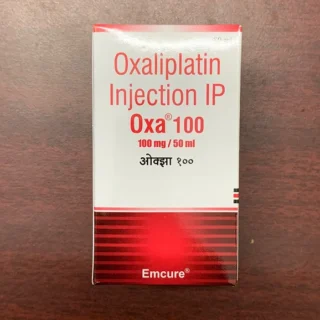
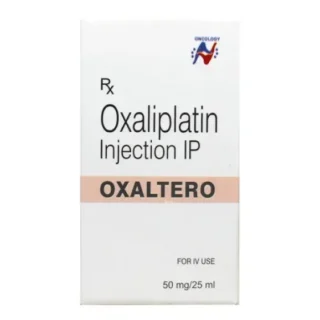
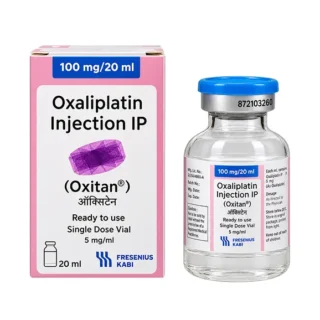
Oxaliplatin Injection
Category: Antineoplastic / Chemotherapy drug (Platinum-based)
Form: Injectable solution for intravenous (IV) use
Uses:
-
Primarily used in colorectal cancer, often in combination with other chemotherapy agents (e.g., 5-fluorouracil and leucovorin) as part of FOLFOX regimen.
-
Can also be used for other gastrointestinal cancers under specialist supervision.
Mechanism of Action:
-
Oxaliplatin is a platinum-based alkylating agent.
-
Forms cross-links with DNA, interfering with DNA replication and transcription.
-
This leads to cell cycle arrest and apoptosis (programmed cell death) in rapidly dividing cancer cells.
-
More active in combination therapy due to synergistic effects with other chemotherapy drugs.
Administration:
-
Administered intravenously over a set period, usually as part of a multi-drug regimen.
-
Pre-medication with antiemetics may be used to reduce nausea and vomiting.
-
Dosage is calculated based on body surface area, patient condition, and treatment protocol.
Side Effects:
-
Neurological: peripheral neuropathy (tingling, numbness in hands/feet), cold sensitivity.
-
Hematologic: neutropenia, thrombocytopenia, anemia.
-
Gastrointestinal: nausea, vomiting, diarrhea, mucositis.
-
Other: fatigue, allergic reactions, infusion-related reactions.
Precautions:
-
Monitor blood counts regularly due to risk of myelosuppression.
-
Monitor for neurological symptoms, which may be cumulative with repeated doses.
-
Adequate hydration and antiemetics are recommended to reduce gastrointestinal toxicity.
-
Adjust dose in patients with kidney or liver impairment.
Summary:
Oxaliplatin Injection is a platinum-based chemotherapy drug used mainly in colorectal cancer. It works by forming DNA cross-links that inhibit replication and trigger cancer cell death. Administration is intravenous, often in combination with other chemotherapy drugs, with side effects including neuropathy, blood cell suppression, and gastrointestinal symptoms. Careful monitoring is essential during treatment.