
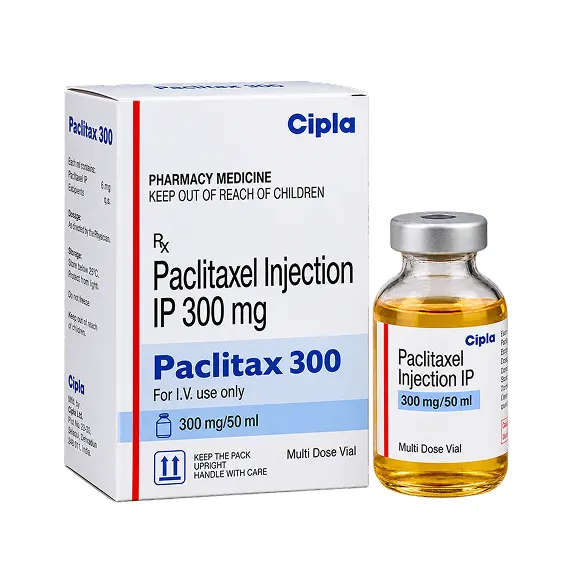
Paclitaxel Paclitax
| Product/Composition | Paclitaxel |
|---|---|
| Strength | 30mg, 100mg, 260mg |
| Form | Injection |
| Production Capacity | 10 Million Vials/Month |
| Packaging | 1 Vial / Box |
| Therapeutic use | Breast Cancer / Ovarian Cancer / Lung Cancer / Kaposi Sarcoma |
| Package Insert/Leaflet | Available upon request |
| Brand Name | Paclitax |
Paclitax contains Paclitaxel, a taxane-based cytotoxic chemotherapy medicine used in the treatment of several types of cancer.
Paclitaxel works by stabilizing microtubules and preventing their normal breakdown during cell division. This disrupts mitosis and inhibits the growth and proliferation of rapidly dividing cancer cells.
Paclitax is administered by intravenous infusion and may be used alone or in combination with other anticancer medicines according to the prescribed oncology protocol.
What is Paclitaxel?
Paclitaxel is a taxane antineoplastic agent that interferes with the microtubule system required for cell division. By stabilizing microtubules, it causes cell-cycle arrest and contributes to the death of susceptible cancer cells.
It has an established role in treatment regimens for breast, ovarian, and non-small cell lung cancers, as well as selected other malignancies.
Benefits / Uses
Paclitax (Paclitaxel) may be used as part of specialist chemotherapy protocols for:
- Ovarian cancer
- Breast cancer
- Non-small cell lung cancer (NSCLC)
- AIDS-related Kaposi sarcoma
- Other selected solid tumors according to established oncology protocols
Paclitaxel may be administered as a single agent or in combination with other anticancer medicines depending on the treatment regimen.
Dosage Guidelines
Paclitaxel dosage depends on the cancer type, treatment regimen, body surface area, previous therapy, liver function, and patient-specific factors.
- Administer by intravenous infusion under qualified oncology supervision.
- Premedication with corticosteroids and antihistamines is commonly used to reduce the risk of hypersensitivity reactions.
- Complete blood counts should be monitored regularly because Paclitaxel can cause significant neutropenia.
- Liver function should be assessed before treatment and monitored as appropriate.
- Patients should be monitored during infusion for hypersensitivity reactions.
- Dose modification or treatment delay may be required depending on blood counts, hepatic function, and treatment-related toxicity.
Wholesale & Supply
Paclitax (Paclitaxel Injection) may be supplied for pharmaceutical wholesale, institutional procurement, and export markets, subject to applicable regulatory requirements.
Bulk procurement enquiries may include:
- Available strengths and presentations
- Packaging configuration
- Certificate of Analysis (CoA)
- Batch documentation
- Manufacturing documentation
- Export and shipping documentation
Buying Online
Paclitaxel is a prescription chemotherapy medicine and should be sourced through authorized pharmaceutical distributors, hospitals, or licensed healthcare channels.
It should be prepared, handled, and administered by qualified healthcare professionals experienced in cytotoxic medicines.
Reviews
Individual responses to Paclitaxel vary according to cancer type, disease stage, treatment regimen, previous therapy, and patient-specific factors. Treatment response and tolerability should be evaluated by the treating oncology team.
Quality Assurance
Paclitax (Paclitaxel Injection) should undergo appropriate pharmaceutical quality-control testing according to applicable standards, including relevant testing for identity, potency, purity, sterility, and other formulation-specific quality requirements.
Frequently Asked Questions
What is Paclitax used for?
Paclitax contains Paclitaxel and is used as part of chemotherapy regimens for ovarian cancer, breast cancer, non-small cell lung cancer, Kaposi sarcoma, and selected other malignancies.
What type of medicine is Paclitaxel?
Paclitaxel is a taxane-based cytotoxic chemotherapy medicine and microtubule stabilizer.
How does Paclitaxel work?
Paclitaxel stabilizes microtubules and prevents their normal disassembly, disrupting mitosis and inhibiting the proliferation of susceptible cancer cells.
How is Paclitax administered?
Paclitax is administered by intravenous infusion under the supervision of qualified healthcare professionals.
Is Paclitaxel used for breast cancer?
Yes. Paclitaxel is an established component of several chemotherapy regimens used to treat breast cancer.
Is Paclitaxel used for ovarian cancer?
Yes. Paclitaxel is commonly incorporated into chemotherapy regimens for ovarian cancer.
What are the common side effects of Paclitaxel?
Potential adverse effects include neutropenia, anemia, hair loss, peripheral neuropathy, nausea, fatigue, muscle or joint pain, and injection-related or hypersensitivity reactions.
Why is premedication used with Paclitaxel?
Premedication with corticosteroids and antihistamines is commonly used to reduce the risk and severity of hypersensitivity reactions associated with Paclitaxel infusion.
Does Paclitaxel require blood-count monitoring?
Yes. Regular complete blood counts are important because Paclitaxel can cause significant bone-marrow suppression, particularly neutropenia.
Who should administer Paclitax?
Paclitax should be prescribed and administered by qualified healthcare professionals experienced in cancer chemotherapy.
Conclusion
Paclitax (Paclitaxel Injection) is a taxane-based cytotoxic chemotherapy medicine used in established treatment protocols for breast cancer, ovarian cancer, non-small cell lung cancer, Kaposi sarcoma, and selected other malignancies. By stabilizing microtubules and disrupting cell division, Paclitaxel inhibits the proliferation of susceptible cancer cells. Because treatment can cause myelosuppression, peripheral neuropathy, and hypersensitivity reactions, administration requires specialist oncology supervision and appropriate monitoring.