
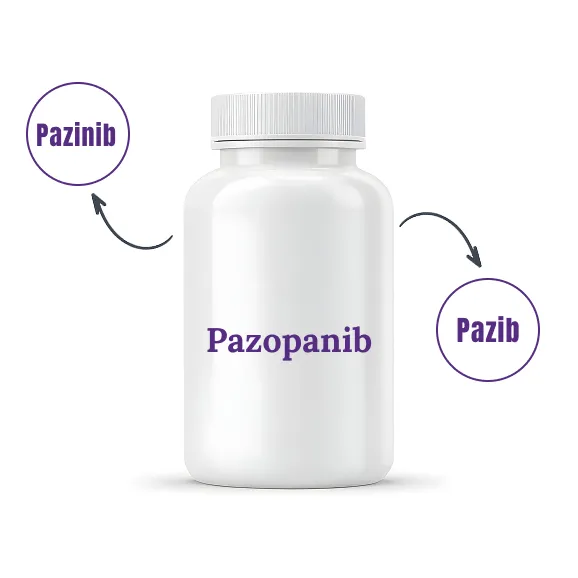


Pazopanib Tablets
| Product/Composition | Pazopanib Tablets |
|---|---|
| Strength | 200mg |
| Form | Tablet |
| Therapeutic use | Anti Cancer |
| Package Insert/Leaflet | Available upon request |
| Brand Name | Pazinib, Pazib |
Pazopanib Tablets are a targeted cancer therapy used to treat certain types of advanced or metastatic cancers.
Here are the key details:
-
Main Uses:
-
Treatment of advanced renal cell carcinoma (kidney cancer).
-
Management of soft tissue sarcomas that cannot be removed by surgery or have spread to other parts of the body.
-
-
How It Works:
-
Pazopanib is a tyrosine kinase inhibitor (TKI).
-
It works by blocking proteins that stimulate tumor blood vessel growth (angiogenesis) and cancer cell proliferation.
-
This helps slow down tumor growth and spread.
-
-
Administration:
-
Taken orally, usually once daily, with or without food.
-
Swallow tablets whole; do not crush or chew.
-
The dose and duration are determined by the doctor based on the type of cancer, body response, and tolerance.
-
-
Common Side Effects:
-
Diarrhea, nausea, vomiting, or loss of appetite.
-
Fatigue, headache, or dizziness.
-
High blood pressure or mild hair color changes in some patients.
-
-
Serious Concerns:
-
May cause liver problems, so regular liver function tests are required.
-
Can lead to heart problems, including irregular heartbeat or heart failure in rare cases.
-
Rare bleeding, blood clotting, or gastrointestinal perforation may occur.
-
Severe high blood pressure may require monitoring or medication adjustment.
-
-
Precautions:
-
Avoid grapefruit and grapefruit juice, as they may interfere with the drug’s metabolism.
-
Inform the doctor about all other medications, as pazopanib interacts with many drugs.
-
Regular blood pressure, liver, and kidney function monitoring is essential.
-
Use cautiously in patients with heart, liver, or kidney disease.
-
-
Storage: Store at room temperature, away from moisture, heat, and direct sunlight.
Pazopanib is effective for slowing the progression of certain cancers, but requires close medical supervision due to potential liver, heart, and blood pressure-related side effects.