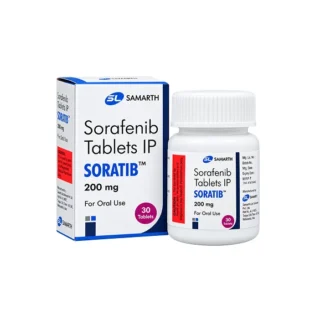
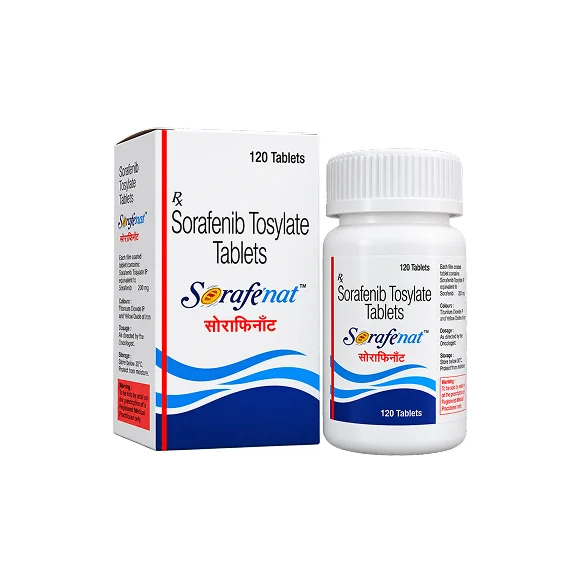
Sorafenib Sorafenat
| Product/Composition | Sorafenib Tablets |
|---|---|
| Strength | 200mg |
| Form | Tablet |
| Production Capacity | 10 Million Tablets/Month |
| Packaging | 10 X 10 Tablets / Box |
| Therapeutic use | Hepatocellular Carcinoma / Renal Cell Carcinoma / Differentiated Thyroid Carcinoma |
| Package Insert/Leaflet | Available upon request |
| Brand Name | Sorafenat |
Sorafenat contains Sorafenib, an oral targeted anticancer medicine belonging to the multi-kinase inhibitor class. Sorafenib inhibits several protein kinases involved in tumor-cell proliferation and angiogenesis, including pathways associated with RAF kinases, VEGFR, and PDGFR.
Sorafenat is used in the treatment of selected advanced cancers, including unresectable hepatocellular carcinoma (HCC), advanced renal cell carcinoma (RCC), and radioactive iodine-refractory differentiated thyroid carcinoma in appropriate patients.
By interfering with signaling pathways involved in tumor growth and blood-vessel formation, Sorafenib can help delay disease progression in patients for whom this targeted treatment is clinically appropriate.
What is Sorafenib?
Sorafenib is an oral tyrosine kinase inhibitor (TKI) and targeted anticancer medicine. It acts on multiple kinase pathways involved in cancer-cell growth, proliferation, and tumor angiogenesis.
Unlike conventional cytotoxic chemotherapy, Sorafenib is a targeted treatment that interferes with molecular signaling pathways involved in tumor development and vascularization.
Benefits / Uses of Sorafenat
Sorafenat (Sorafenib) may be prescribed for:
- Unresectable hepatocellular carcinoma (liver cancer)
- Advanced renal cell carcinoma (kidney cancer)
- Radioactive iodine-refractory differentiated thyroid carcinoma
- Other specialist-directed oncology applications where clinically appropriate
The suitability of Sorafenib depends on the cancer type, disease stage, previous treatment, overall health, and the treating oncologist’s assessment.
Dosage Guidelines
The dosage of Sorafenat should be determined by a qualified oncologist.
For several approved adult indications, Sorafenib is commonly administered twice daily. However, the dose may need to be modified according to tolerability, adverse reactions, organ function, and the specific treatment protocol.
Patients should:
- Take Sorafenat exactly as prescribed.
- Take the tablets consistently according to the prescribed schedule.
- Avoid changing or stopping the dose without medical advice.
- Report persistent or significant adverse effects to their healthcare professional.
- Attend all recommended clinical and laboratory monitoring.
Dose interruption or reduction may be required if clinically significant toxicity develops.
Wholesale & Supply
Onco India International can support bulk and wholesale pharmaceutical requirements for Sorafenib products such as Sorafenat, subject to product availability, applicable regulations, and destination-country requirements.
Distributors, hospitals, pharmacies, pharmaceutical companies, and international buyers can contact the company for product specifications, packaging details, quotations, and supply arrangements.
Buying Sorafenat Online
Sorafenat should be sourced through legitimate and authorized pharmaceutical channels. Sorafenib is a prescription anticancer medicine and should be used under appropriate medical supervision.
For wholesale and international pharmaceutical requirements, buyers should verify product specifications, documentation, packaging, availability, and applicable import/export requirements.
Reviews
Individual responses to Sorafenib can vary according to cancer type, treatment regimen, dose, and overall health status. Common treatment-related effects may include hand-foot skin reaction, diarrhea, fatigue, rash, and increased blood pressure.
Patient experiences should not replace professional medical advice or regular oncology monitoring.
Quality Assurance
Quality-assured Sorafenib products should be manufactured and packaged according to applicable pharmaceutical quality standards. Quality-control procedures may include raw-material testing, in-process controls, finished-product testing, packaging verification, and batch documentation.
Regulatory and documentation requirements may vary according to the destination market.
Frequently Asked Questions
What is Sorafenat used for?
Sorafenat contains Sorafenib and is used for selected advanced cancers, including unresectable hepatocellular carcinoma, advanced renal cell carcinoma, and radioactive iodine-refractory differentiated thyroid carcinoma.
What type of medicine is Sorafenib?
Sorafenib is a multi-kinase inhibitor and targeted anticancer medicine.
How does Sorafenat work?
Sorafenat inhibits multiple kinase pathways involved in tumor-cell proliferation and angiogenesis, including pathways associated with RAF, VEGFR, and PDGFR.
Is Sorafenib a chemotherapy medicine?
Sorafenib is a targeted anticancer therapy, specifically a multi-kinase/tyrosine kinase inhibitor, rather than conventional cytotoxic chemotherapy.
How is Sorafenat usually taken?
Sorafenat is administered orally according to the prescribed oncology regimen. For several approved adult indications, Sorafenib is commonly taken twice daily, although the exact regimen should be determined by the treating oncologist.
What are the common side effects of Sorafenib?
Possible adverse effects include hand-foot skin reaction, diarrhea, fatigue, rash, hypertension, decreased appetite, and nausea. Serious adverse reactions can also occur.
Does Sorafenat require medical monitoring?
Yes. Patients receiving Sorafenib generally require regular monitoring, which may include blood pressure, liver function, blood counts, electrolyte levels, and assessment for treatment-related toxicity.
Can Sorafenat be stopped without medical advice?
No. Patients should not discontinue Sorafenib or change the prescribed dose without consulting their treating healthcare professional.
Conclusion
Sorafenat (Sorafenib) is an oral multi-kinase inhibitor used as targeted therapy for selected advanced cancers. By blocking multiple signaling pathways involved in tumor-cell proliferation and angiogenesis, Sorafenib can help control disease progression in appropriate patients. Because treatment response and toxicity require careful assessment, Sorafenat should be prescribed and monitored by a qualified oncology professional.