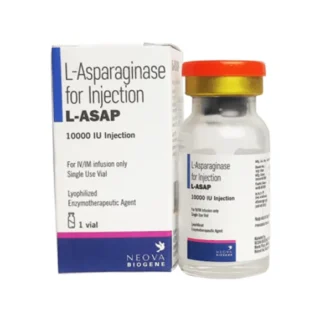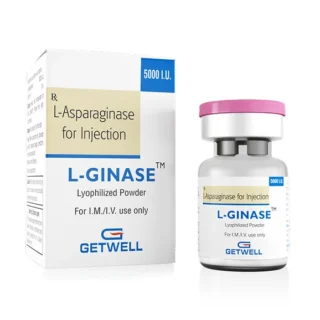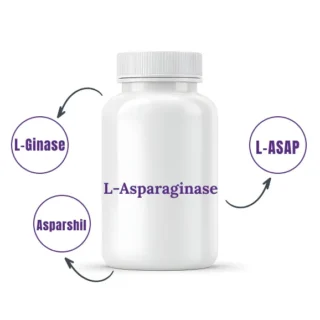
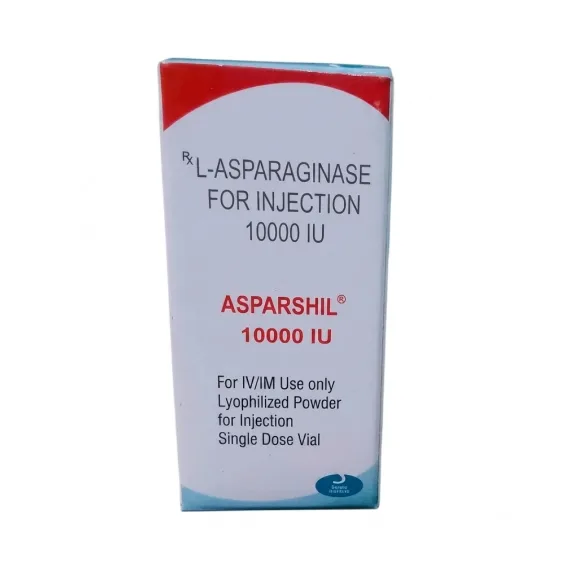
L-Asparaginase Asparshil
| Product/Composition | L-Asparaginase |
|---|---|
| Strength | 5000iu, 10000iu |
| Form | Injection |
| Production Capacity | 10 Million Vials/Month |
| Packaging | 1 Vial / Box |
| Therapeutic use | Acute Lymphoblastic Leukemia / Cancer Treatment |
| Package Insert/Leaflet | Available upon request |
| Brand Name | Asparshil |
Asparshil contains L-Asparaginase, an enzyme-based antineoplastic medicine primarily used as part of combination chemotherapy regimens for acute lymphoblastic leukemia (ALL) and selected lymphoblastic malignancies.
L-Asparaginase works by breaking down circulating L-asparagine into aspartic acid and ammonia. Certain malignant lymphoid cells have limited capacity to synthesize sufficient asparagine and may depend on circulating asparagine for protein synthesis. Depletion of circulating asparagine can therefore interfere with protein synthesis and contribute to the death of susceptible cancer cells.
Asparshil should be administered by qualified healthcare professionals according to the prescribed oncology protocol and the specific product formulation.
What is L-Asparaginase?
L-Asparaginase is an antineoplastic enzyme and asparagine-depleting agent. It reduces circulating L-asparagine levels, which can inhibit protein synthesis in susceptible leukemia cells.
It is generally incorporated into a multi-drug chemotherapy regimen rather than used as a standalone treatment.
Benefits / Uses
Asparshil (L-Asparaginase) may be used as part of treatment protocols for:
- Acute lymphoblastic leukemia (ALL)
- Selected lymphoblastic lymphomas
- Other selected hematological malignancies according to oncology protocols
The exact indication and chemotherapy combination should be determined by the treating oncologist.
Dosage Guidelines
The dose of L-Asparaginase depends on the specific formulation, treatment protocol, patient’s body surface area or weight, and clinical condition.
Important considerations include:
- Use only according to the prescribed oncology protocol.
- Administration should be performed by qualified healthcare professionals.
- Monitor blood counts and relevant biochemical parameters.
- Liver function may require monitoring.
- Blood glucose and coagulation parameters may need assessment.
- Patients should be monitored for hypersensitivity reactions.
- Pancreatitis is an important potential complication requiring prompt medical evaluation.
- Treatment may need to be interrupted or discontinued if significant toxicity occurs.
Wholesale & Supply
Asparshil (L-Asparaginase) may be supplied for pharmaceutical wholesale and institutional procurement, subject to applicable regulatory requirements and destination-country regulations.
Bulk buyers may request:
- Available strengths and presentations
- Packaging details
- Certificate of Analysis (CoA)
- Batch information
- Manufacturing documentation
- Export and shipping documentation
Buying Online
L-Asparaginase is a prescription antineoplastic medicine and should be obtained through authorized pharmaceutical distributors, hospitals, pharmacies, or licensed healthcare channels.
Reviews
Individual response to L-Asparaginase can vary according to the leukemia subtype, treatment protocol, formulation, dosage, and patient characteristics. Treatment response and tolerability should be assessed by the treating oncology team.
Quality Assurance
L-Asparaginase products should undergo appropriate quality-control testing according to the applicable pharmaceutical standards, including relevant tests for identity, potency, purity, sterility, and product-specific specifications.
Frequently Asked Questions
What is Asparshil used for?
Asparshil contains L-Asparaginase and is primarily used as part of chemotherapy regimens for acute lymphoblastic leukemia and selected related hematological malignancies.
What type of medicine is L-Asparaginase?
L-Asparaginase is an enzyme-based antineoplastic medicine that depletes circulating L-asparagine.
How does Asparshil work?
It breaks down circulating L-asparagine, reducing its availability to susceptible malignant cells and interfering with their protein synthesis.
How is Asparshil administered?
The route depends on the specific L-Asparaginase formulation. It should be administered by qualified healthcare professionals according to the prescribed treatment protocol.
What are the important side effects of L-Asparaginase?
Potential adverse effects include hypersensitivity reactions, pancreatitis, liver toxicity, changes in blood glucose, and coagulation abnormalities. Appropriate monitoring is required.
Does L-Asparaginase require laboratory monitoring?
Yes. Depending on the treatment protocol, blood counts, liver function, glucose levels, coagulation parameters, and other laboratory values may be monitored.
Can Asparshil be used with other chemotherapy medicines?
Yes. L-Asparaginase is commonly incorporated into combination chemotherapy protocols, particularly for ALL.
Who should administer Asparshil?
Asparshil should be administered under specialist oncology supervision by healthcare professionals who can monitor and manage potential serious adverse reactions.
Conclusion
Asparshil (L-Asparaginase) is an enzyme-based antineoplastic medicine used in specific chemotherapy protocols, particularly for acute lymphoblastic leukemia. Its therapeutic action is based on depletion of circulating asparagine, which can interfere with protein synthesis in susceptible malignant lymphoid cells. Because L-Asparaginase can cause serious hypersensitivity and other systemic toxicities, specialist supervision and appropriate clinical monitoring are essential.