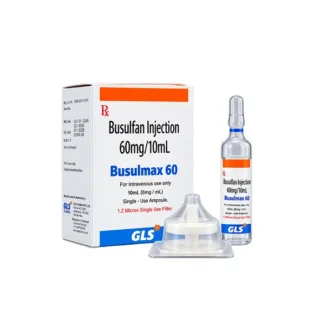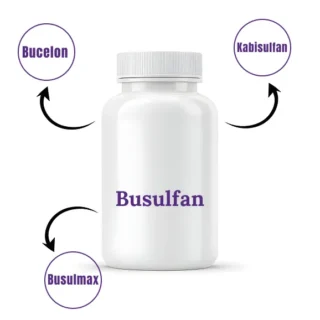
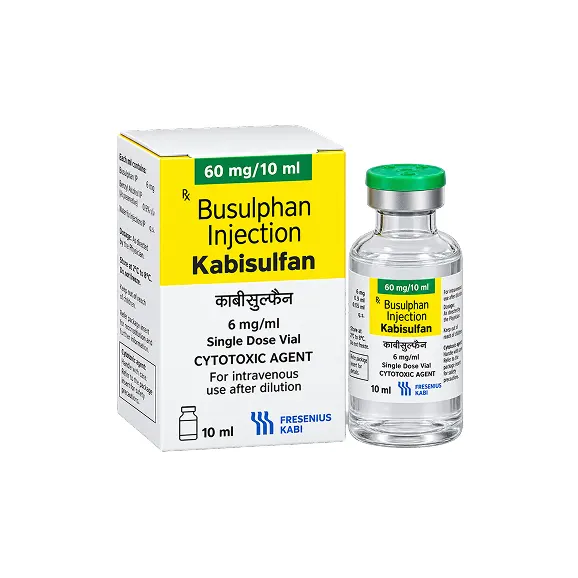
Busulfan Kabisulfan
| Product/Composition | Busulfan Tablets |
|---|---|
| Strength | 60 mg |
| Form | Tablet |
| Production Capacity | 10 Million Tablets/Month |
| Packaging | 10 X 10 Tablets / Box |
| Therapeutic use | Hematopoietic Stem Cell Transplantation / Myeloablative Conditioning |
| Package Insert/Leaflet | Available upon request |
| Brand Name | Kabisulfan |
Kabisulfan contains Busulfan, a potent alkylating agent primarily used as part of conditioning regimens before hematopoietic stem cell transplantation (HSCT). It works by causing DNA cross-linking, thereby interfering with DNA replication and cell division and producing profound bone-marrow suppression.
Busulfan is administered under specialist supervision because dosing and monitoring are important for achieving the intended therapeutic effect while reducing the risk of serious toxicity.
What is Busulfan?
Busulfan is a bifunctional alkylating agent with strong myeloablative activity. It damages DNA by forming cross-links between DNA strands, preventing normal DNA replication and cell proliferation.
Its principal modern clinical application is myeloablative conditioning before hematopoietic stem cell or bone marrow transplantation. It may also have applications in selected hematologic conditions under specialist care.
Benefits and Uses of Busulfan
Busulfan may be used for:
- Conditioning before hematopoietic stem cell transplantation
- Conditioning before bone marrow transplantation
- Myeloablation as part of transplantation protocols
- Suppression of bone marrow activity before stem-cell infusion
- Treatment of selected myeloproliferative disorders under specialist supervision
The specific treatment protocol depends on the underlying disease, patient characteristics, and transplantation regimen.
Dosage Guidelines
Busulfan dosing is individualized according to the formulation, treatment protocol, body size, age, and clinical condition.
- Take or receive Kabisulfan only as prescribed by an oncologist or transplant specialist.
- Depending on the formulation, Busulfan may be administered orally or intravenously.
- Intravenous Busulfan may require pharmacokinetic monitoring to determine appropriate exposure.
- Do not change the prescribed dose or treatment schedule.
- Blood counts and organ function should be monitored during treatment.
- Specialist supervision is essential because Busulfan has a relatively narrow therapeutic range.
Wholesale & Supply
Onco India International supports the wholesale and international supply of Busulfan products for eligible pharmaceutical distributors, importers, hospitals, and healthcare suppliers.
Bulk supply requirements can be discussed based on:
- Required quantity
- Destination country
- Packaging requirements
- Regulatory requirements
- Shipping and documentation requirements
Buying Busulfan Online
Busulfan is a prescription oncology medicine and should be procured through authorized pharmaceutical suppliers and distributors.
For commercial or institutional requirements of Kabisulfan (Busulfan), customers can contact Onco India International for product information, documentation, and supply requirements.
Reviews
Individual responses to Busulfan vary according to the underlying condition, treatment regimen, patient characteristics, and other medicines being administered. Its use and effectiveness should be evaluated by an experienced oncology or transplant team.
Quality Assurance
Busulfan products should be manufactured, tested, packaged, and stored according to applicable pharmaceutical quality standards and regulatory requirements.
Relevant product documentation and quality information can be provided according to customer requirements and the regulations of the destination market.
Frequently Asked Questions
What is Kabisulfan used for?
Kabisulfan contains Busulfan and is primarily used as part of conditioning therapy before hematopoietic stem cell transplantation.
What type of medicine is Busulfan?
Busulfan is a bifunctional alkylating agent with myeloablative activity.
How does Busulfan work?
Busulfan forms cross-links in DNA, interfering with DNA replication and cell division. This produces significant suppression of bone-marrow activity.
Is Busulfan used before stem cell transplantation?
Yes. Busulfan is used in selected conditioning regimens before hematopoietic stem cell transplantation.
Does Busulfan require monitoring?
Yes. Close specialist monitoring is important. Blood counts, liver function, and other clinical parameters may be monitored. Intravenous Busulfan may also require pharmacokinetic monitoring.
What are the possible side effects?
Possible adverse effects include myelosuppression, nausea, vomiting, mucositis, liver toxicity, skin changes, and increased susceptibility to infections. Serious complications may occur with high-dose therapy.
Does Busulfan require a prescription?
Yes. Busulfan is a potent prescription medicine and should only be used under appropriate specialist supervision.
Conclusion
Kabisulfan (Busulfan) is a potent alkylating and myeloablative agent primarily used in conditioning regimens for hematopoietic stem cell transplantation. Because of its potent pharmacological effects and potential for serious toxicity, appropriate dosing, monitoring, and specialist supervision are essential.