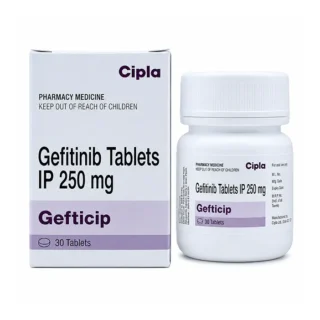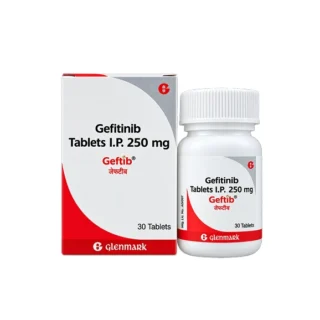
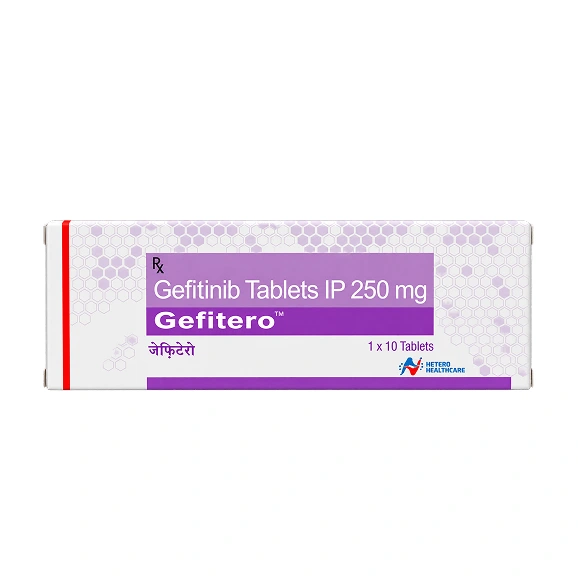
Gefitinib Gefitero
| Product/Composition | Gefitinib Tablets |
|---|---|
| Strength | 250mg |
| Form | Tablet |
| Production Capacity | 10 Million Tablets/Month |
| Packaging | 10 X 10 Tablets / Box |
| Therapeutic use | Non-Small Cell Lung Cancer (NSCLC) |
| Package Insert/Leaflet | Available upon request |
| Brand Name | Gefitero |
Gefitero contains Gefitinib, a targeted anticancer medicine belonging to the epidermal growth factor receptor (EGFR) tyrosine kinase inhibitor (TKI) class. Gefitinib selectively inhibits EGFR signaling, which can contribute to the growth and survival of certain cancer cells.
Gefitinib is primarily used for the treatment of non-small cell lung cancer (NSCLC) in patients whose tumors have specific activating EGFR mutations. It is a prescription medicine and should be used under the supervision of a qualified oncologist.
What is Gefitinib?
Gefitinib is an oral EGFR tyrosine kinase inhibitor. It works by blocking EGFR signaling, thereby interfering with pathways involved in the proliferation and survival of cancer cells.
Gefitinib is particularly relevant in EGFR mutation-positive non-small cell lung cancer, where targeted inhibition of EGFR can provide therapeutic benefit.
Benefits and Uses of Gefitero
Gefitero (Gefitinib) may be prescribed for:
- Treatment of EGFR mutation-positive non-small cell lung cancer
- Targeted treatment of selected patients with locally advanced or metastatic NSCLC
- Inhibition of abnormal EGFR signaling in susceptible tumor cells
- Targeted therapy based on the molecular characteristics of the tumor
Before treatment, appropriate testing for EGFR mutations may be required to determine whether Gefitinib is suitable.
Dosage Guidelines
The dosage of Gefitinib should be determined by the treating oncologist according to the patient’s diagnosis and clinical condition.
- Gefitinib is commonly administered once daily.
- It can generally be taken with or without food.
- Take the medicine at approximately the same time each day.
- Tablets should be taken exactly as prescribed.
- Do not change the dose or discontinue treatment without consulting the treating physician.
- If swallowing the tablet is difficult, follow the specific instructions provided by the healthcare professional or product information.
Patients receiving Gefitinib may require monitoring for liver function, skin reactions, diarrhea, and pulmonary symptoms.
Wholesale & Supply
Onco India International can support wholesale and bulk pharmaceutical supply of Gefitero (Gefitinib) for eligible markets and pharmaceutical procurement requirements.
Bulk supply may be suitable for:
- Pharmaceutical distributors
- Hospitals and healthcare institutions
- Oncology distributors
- International pharmaceutical buyers
- Licensed importers and exporters
- Healthcare procurement organizations
Packaging, documentation, minimum order quantities, and availability may vary according to market requirements.
Buying Gefitinib Online
When sourcing Gefitero or other Gefitinib products, buyers should verify the strength, dosage form, manufacturer, batch information, packaging, and applicable quality documentation.
Gefitinib is a prescription anticancer medicine. Pharmaceutical products should be obtained through authorized and appropriately licensed suppliers and used under qualified medical supervision.
Reviews
Individual responses to Gefitinib can vary depending on the patient’s cancer type, EGFR mutation status, disease stage, previous treatments, and overall health.
For pharmaceutical procurement, important considerations include product quality, manufacturing standards, documentation, packaging integrity, and supply reliability.
Quality Assurance
Quality assurance is essential for targeted oncology medicines such as Gefitinib. Products should be manufactured, tested, packaged, and stored according to applicable pharmaceutical quality and regulatory requirements.
Relevant product documentation, including available product specifications, certificates, batch information, and package inserts, can be requested where applicable.
Frequently Asked Questions
What is Gefitero used for?
Gefitero contains Gefitinib and is primarily used for the treatment of certain EGFR mutation-positive non-small cell lung cancers.
What type of medicine is Gefitinib?
Gefitinib is a targeted anticancer medicine classified as an EGFR tyrosine kinase inhibitor (TKI).
How does Gefitinib work?
Gefitinib blocks the tyrosine kinase activity of EGFR, reducing signaling pathways that can promote cancer-cell growth and survival.
Is Gefitinib suitable for all lung cancer patients?
No. Gefitinib is particularly used when the tumor has appropriate activating EGFR mutations. Molecular testing and oncologist assessment are important before treatment.
How is Gefitinib administered?
Gefitinib is an oral medicine commonly taken once daily, with or without food, according to the prescribed treatment regimen.
What are common side effects of Gefitinib?
Common adverse effects may include diarrhea, acne-like skin rash, dry skin, itching, nausea, and changes in liver function tests. More serious complications can occur, including interstitial lung disease.
Can Gefitinib affect the liver?
Yes. Gefitinib can cause elevations in liver enzymes and, less commonly, more significant liver injury. Liver-function monitoring may therefore be required during treatment.
Can Gefitinib cause lung problems?
Yes. Although uncommon, Gefitinib can cause interstitial lung disease/pneumonitis, which can be serious. New or worsening shortness of breath, cough, or fever should be promptly reported to a healthcare professional.
Is Gefitinib a chemotherapy medicine?
Gefitinib is generally classified as a targeted therapy, specifically an EGFR tyrosine kinase inhibitor, rather than conventional cytotoxic chemotherapy.
Conclusion
Gefitero (Gefitinib) is a targeted EGFR tyrosine kinase inhibitor used primarily for selected patients with EGFR mutation-positive non-small cell lung cancer. By inhibiting EGFR signaling, it can interfere with pathways responsible for cancer-cell growth and survival.
Because Gefitinib can cause significant adverse effects and is most appropriate for tumors with specific molecular characteristics, treatment should be guided by an experienced oncology professional.